Meta has spent the last couple of years handing out AI tools for free across Instagram, Facebook, and WhatsApp. That’s starting to change. On September 14, 2026, at an event in New York, Meta introduced Meta One, a new subscription system that bundles its most compute-heavy AI features and professional tools into paid tiers for the first time under one unified brand.
The core apps aren’t going behind a paywall — Meta has been explicit that the free experience isn’t changing. What’s on offer instead is more usage of the AI features that already exist, plus a set of professional tools aimed squarely at creators and small businesses. Here’s what’s actually in it, what it costs, and who it’s built for.
What Meta One Actually Is
Meta One isn’t a brand-new product so much as a consolidation of things Meta had already started rolling out piecemeal. Earlier in the year, the company launched standalone Instagram Plus, Facebook Plus, and WhatsApp Plus plans. Meta One brings those together under one subscription umbrella, adds new AI-focused bundle tiers on top, and extends the same approach to business and creator accounts.
At launch, the service covers more than 50 features across Instagram, Facebook, WhatsApp, and Meta AI, with Meta saying it already has 15 million subscriptions and trials to date. The company has also said it plans to expand Meta One’s reach to Edits and its AI glasses lineup over time, which signals this isn’t meant to stay contained to the four apps it launched with.
What’s Included, And What It Costs
The pricing structure runs across three rough categories.
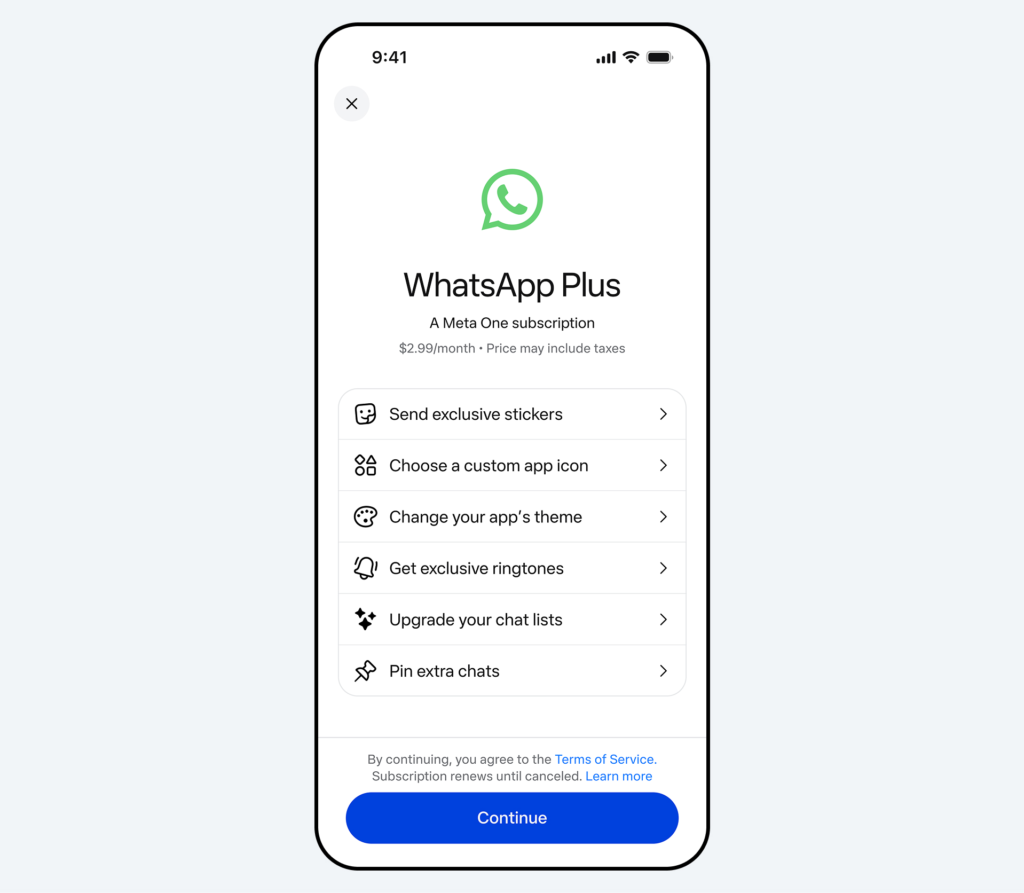
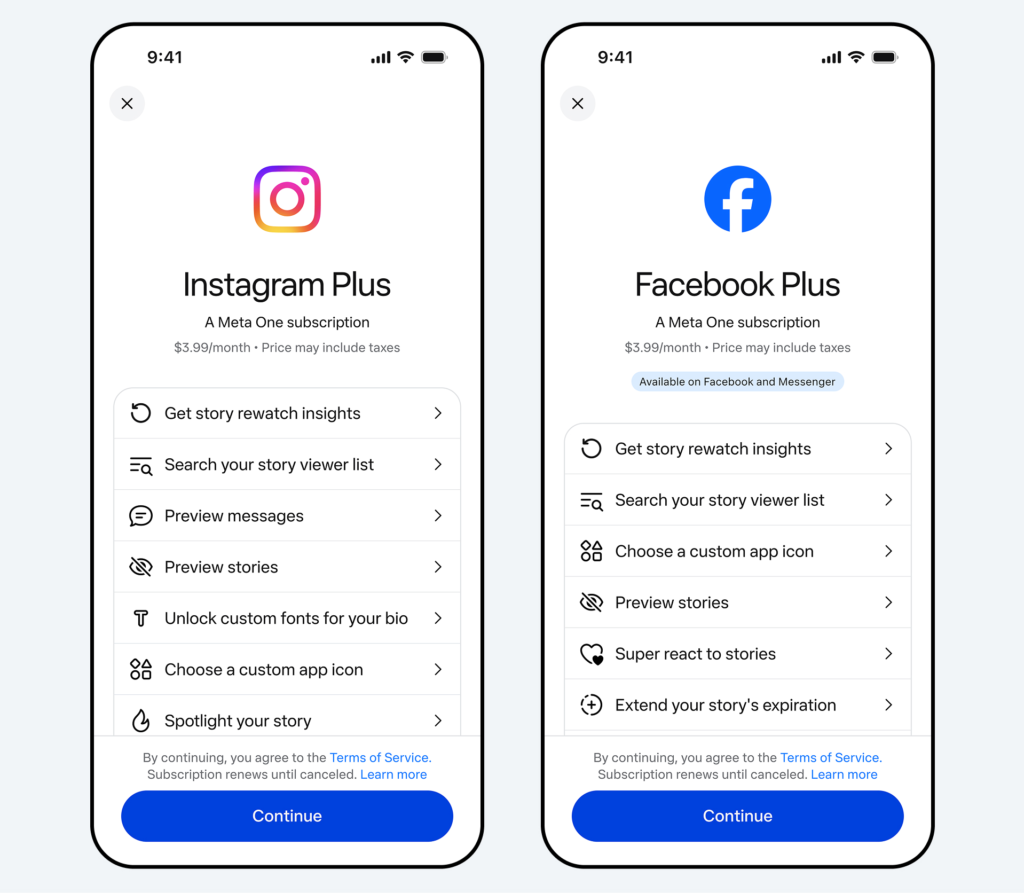
For individual app upgrades, Instagram Plus and Facebook Plus are priced at $3.99 a month each, while WhatsApp Plus comes in slightly cheaper at $2.99 a month. These plans focus on expression and organization features — things like WhatsApp themes and pinned chats, or Instagram DM customization.
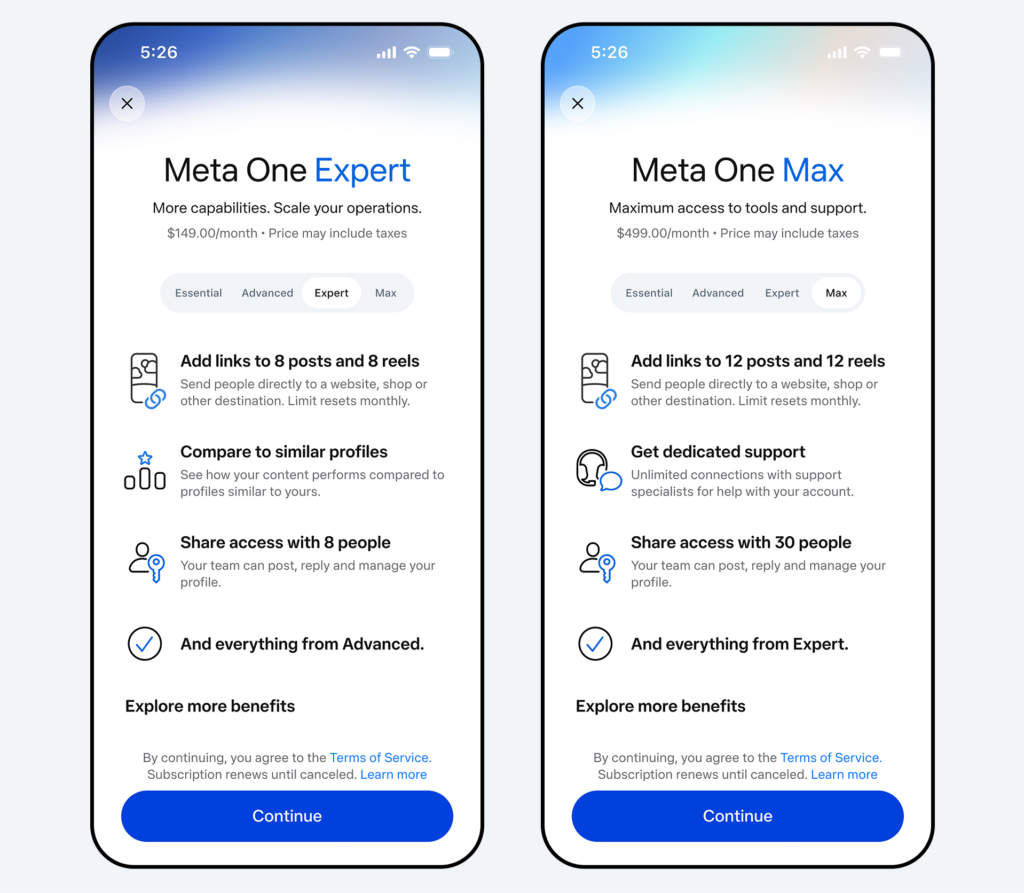
For people who want more AI horsepower specifically, Meta One’s bundle plans start with Core at $7.99 a month, which includes more frequent use of Restyle on Instagram, voice effects, and image and video generation through Meta AI, including Meta’s Muse video models. A higher Premium bundle sits above Core for users who want even more AI usage on top of that.
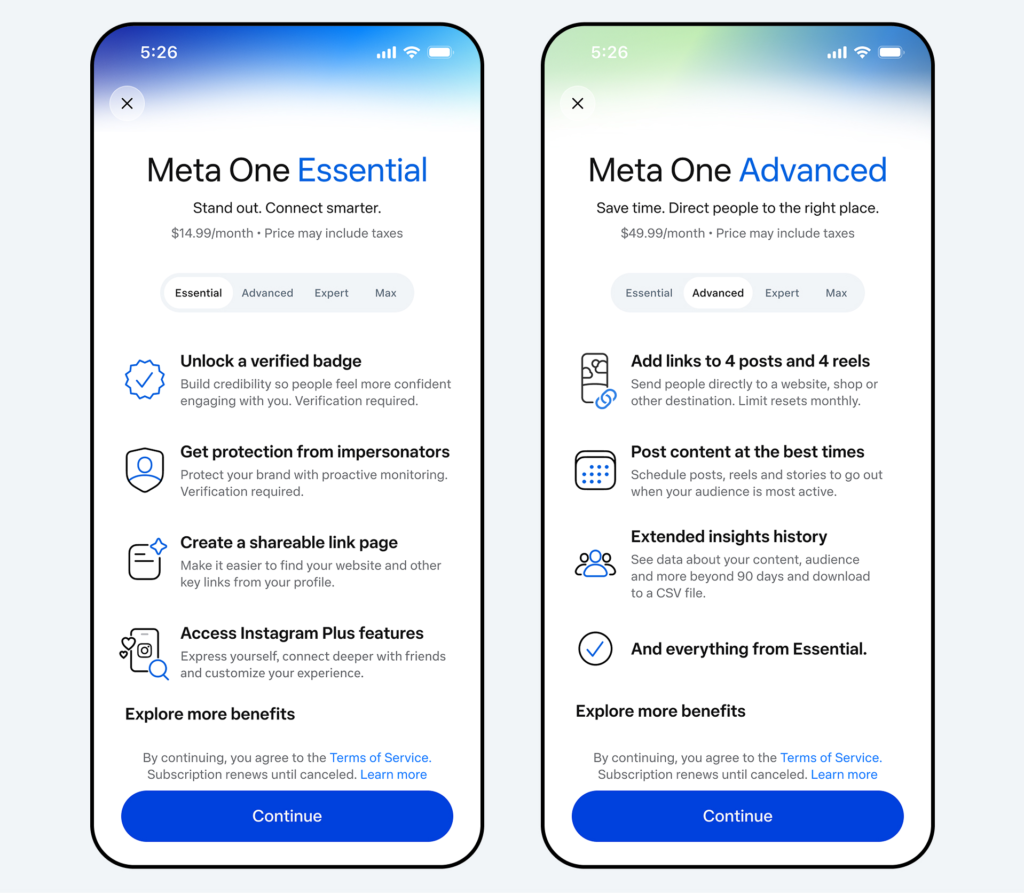
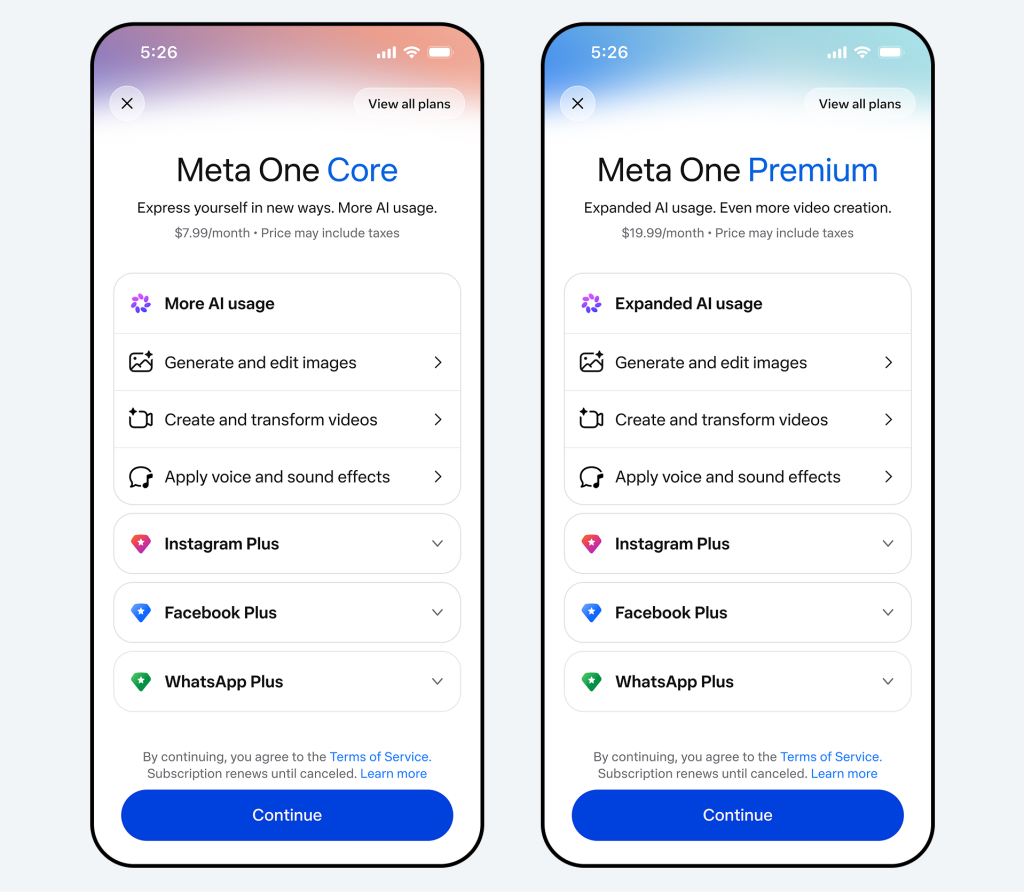
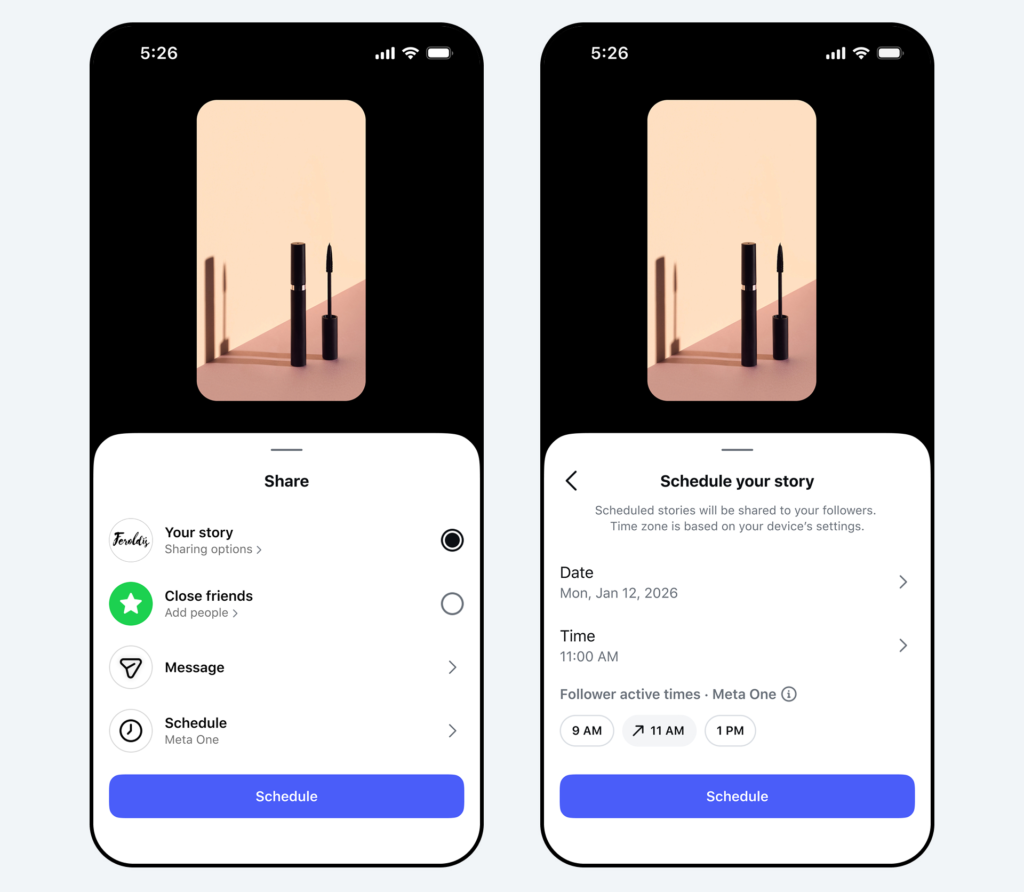
For creators and businesses, the pricing jumps considerably. Reported tiers start around $149 a month for an “Expert” plan and scale up to $499 a month for a “Max” tier aimed at higher-volume accounts. These plans are built around professional tools rather than personal expression — things like enhanced profiles, expanded access to Meta Business Agent for round-the-clock customer replies, and scheduling and analytics tools that creators have historically had to source from third-party platforms.
The Feature Creators Are Actually Talking About
Of everything included in the launch, one feature has gotten a disproportionate amount of attention from creators: password-free delegation. It lets a creator hand off posting and scheduling tasks to an assistant or team member without ever sharing account login credentials.
Dara Denney, a creator who spoke at the launch event, described the problem this solves in plain terms: a single sponsored post can take close to an hour to actually get live, once you account for formatting, tagging, and the back-and-forth of caption edits. With password-free delegation, an assistant was able to publish a sponsored post Denney had forgotten about and prepare the accompanying Stories, without ever touching her actual login. For creators juggling brand deals alongside content production, that’s a genuinely practical time-saver rather than a flashy AI gimmick.
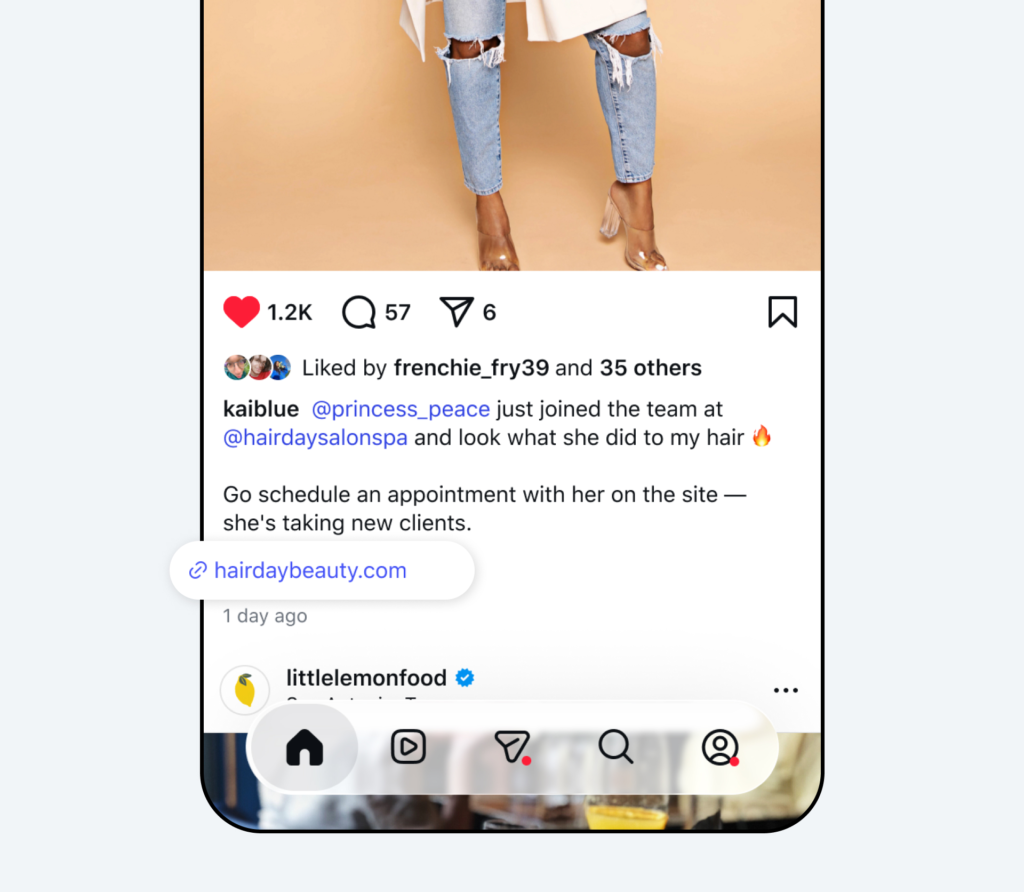
More broadly, Meta One is positioning itself to absorb tools creators currently pay for separately — social media schedulers, analytics dashboards, and link-in-bio products all get folded into the native apps instead of requiring a separate subscription elsewhere.
Why Meta Is Doing This Now
The timing lines up with something Mark Zuckerberg said publicly just a month earlier. In a lengthy public statement outlining his vision for AI, he floated the idea that free AI agents and broad access should remain the baseline, while people willing to pay for more features or additional computing power could opt into paid tiers. Meta One is effectively that idea put into practice.
It’s also a fairly direct response to the economics of running AI at scale. Generating images, video, and voice effects for billions of free users is expensive, and Meta has been under real pressure from its own AI infrastructure spend. Turning the most compute-intensive features into a paid upsell, while keeping the baseline experience free, is a way to offset some of that cost without alienating the vast majority of users who’ll never subscribe.
What This Means For Indian Creators And Businesses
For India specifically, price sensitivity is going to shape adoption more than feature depth will. The $149–$499 monthly range for creator and business tiers is priced for markets where those numbers are a rounding error against ad revenue; for a large segment of Indian creators and small businesses, that’s a meaningful monthly cost that needs to translate into clear, measurable return before it’s worth paying for.
Where this could matter more immediately is WhatsApp Plus. WhatsApp is the default messaging layer for hundreds of millions of Indian users and a growing number of small businesses running customer support and sales entirely through chat. A $2.99 tier that adds organization and personalization features is a far easier purchase decision here than the higher-end AI bundles, simply because the audience already lives inside that app daily.
For agencies and talent managers already tracking creator monetisation tools, the practical move right now is watching whether Meta rolls out India-specific pricing or regional adjustments, the way several global subscription services eventually do, rather than assuming the dollar pricing announced at launch is what Indian creators will actually pay.
Reference: Click Here
FAQs
What is Meta One and how does it relate to Meta’s previous plans?
Meta One is a consolidation of existing paid plans (Instagram Plus, Facebook Plus, WhatsApp Plus) brought under a unified subscription umbrella, with new AI-focused bundle tiers and expanded scope to business and creator accounts. It is not a brand-new product, but a continuation and expansion of features Meta had already begun rolling out.
What is included in Meta One and how much does it cost?
Pricing spans three categories. Instagram Plus and Facebook Plus cost $3.99 a month each, while WhatsApp Plus costs $2.99 a month. The Core bundle starts at $7.99 a month and adds more AI features such as Restyle, voice effects, and Meta AI image and video generation. A higher Premium bundle offers more AI usage. For creators and businesses, plans range from around $149 to $499 a month, focusing on professional tools like enhanced profiles, Meta Business Agent access, scheduling, and analytics.
What is password-free delegation and why is it significant for creators?
Password-free delegation lets a creator hand off posting and scheduling tasks to an assistant or team member without sharing login credentials. This can save substantial time, as a sponsored post or related Stories can be published or prepared without the creator having to log in directly, addressing practical workflow challenges for creators juggling brand deals and content production.
Why is Meta launching Meta One now?
The timing aligns with Mark Zuckerberg’s vision that free AI agents and broad access should be the baseline, with paid tiers offering more features or computing power. It also addresses the economics of running AI at scale by offsetting compute-intensive features with paid upsells while keeping the free baseline.
What does Meta One mean for Indian creators and businesses?
Price sensitivity in India will influence adoption more than feature depth. The higher creator and business tiers may be costly for many, so WhatsApp Plus at $2.99 could be a more accessible entry point, given WhatsApp’s central role for many users and small businesses. Regions may see price adjustments or India-specific pricing in the future, rather than sticking to U.S. dollar pricing.