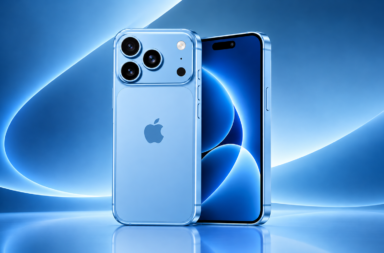
Seven years after Samsung shipped the very first Galaxy Fold, Apple has entered the foldable phone category — and it did so with a name nobody had quite guessed. Not iPhone Ultra, not iPhone Fold, but the iPhone Duo, unveiled at Apple’s September 9 event alongside the iPhone 18 Pro, iPhone 18 Pro Max, and Apple Watch Series 12. Here’s what’s actually confirmed, now that the keynote is done and the leaks have been settled by Apple’s own product pages.
A Name Nobody Predicted
For months, “iPhone Fold” and “iPhone Ultra” were the two names circulating in leak coverage. Apple went with neither. The iPhone Duo name leaked just hours before the keynote itself, via Bloomberg’s Mark Gurman, and it turned out to be accurate down to the final announcement — a rare case of a last-minute leak landing exactly right instead of getting corrected on stage.
It’s also worth noting the timing of this event more broadly: this was the first Apple product keynote under new CEO John Ternus, who took over from Tim Cook on September 1. A first foldable iPhone landing on a new CEO’s debut keynote isn’t a coincidence Apple would have left to chance.
The Design: Two Screens, One Very Thin Phone
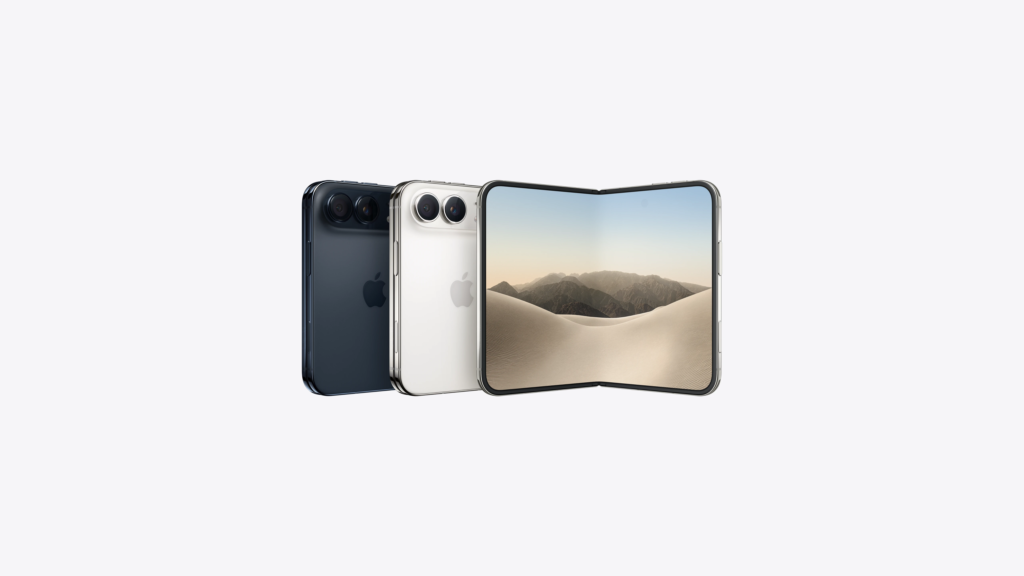
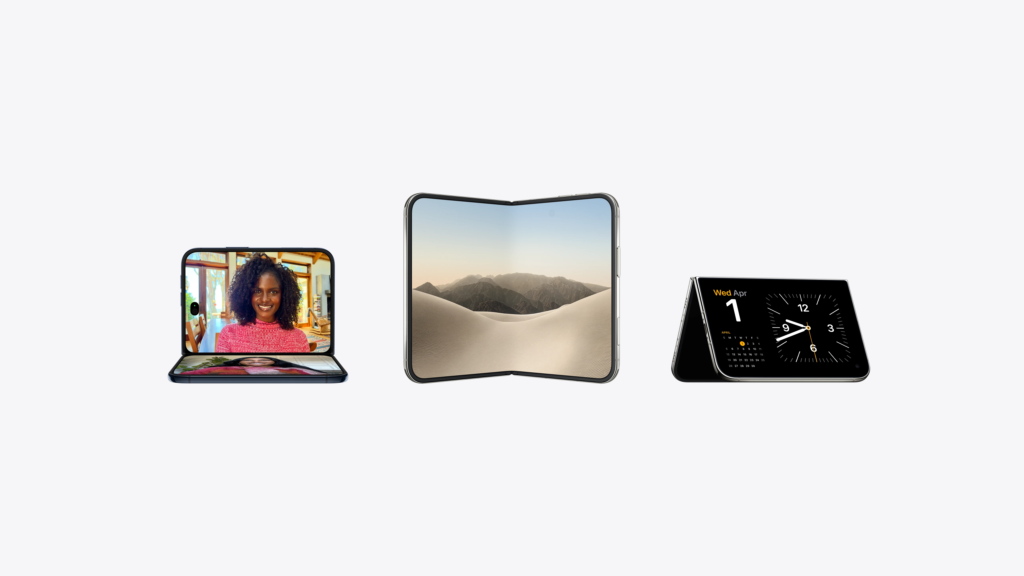
The iPhone Duo folds around a 7.6-inch inner display and a 5.4-inch outer display, both using Apple’s Super Retina XDR OLED technology at the same aspect ratio, with ProMotion refresh up to 120Hz and peak outdoor brightness of 3,000 nits. Closed, the outer screen alone offers roughly 90% of the screen area of an iPhone 18 Pro, meaning the everyday, one-handed usability isn’t meaningfully compromised just because the phone folds.
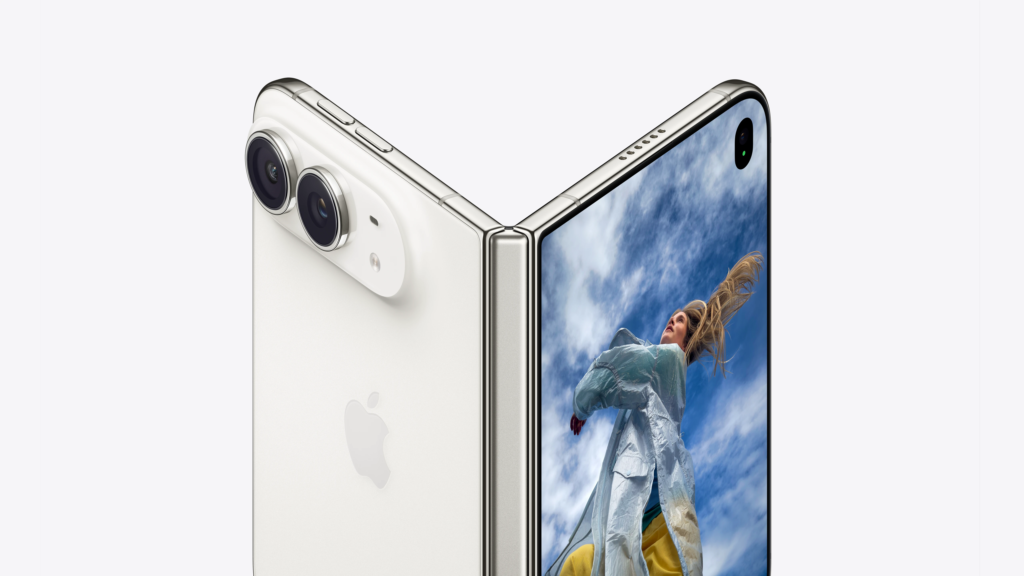
Apple is also calling it the thinnest iPhone ever made — 5.2mm thick when open, 11.3mm closed, weighing 254 grams. The frame is Grade 5 titanium with Ceramic Shield on both front and back, and the phone carries an IP68 rating, addressing one of the more common durability concerns that’s followed foldable phones from competitors since the category began.
What’s Powering It
Under the hood, the iPhone Duo runs the same A20 Pro chip found in the iPhone 18 Pro lineup, paired with 12GB of RAM and storage options running from 256GB up to 2TB. It’s also the debut device for Apple’s next-generation C2 modem, which the company says is meaningfully faster and more power-efficient than the outgoing C1X, and which brings mmWave 5G support to US models for the first time on this chip generation.
Camera-wise, the Duo keeps things simpler than the Pro lineup: a 48-megapixel Dual Fusion system on the back combining a 48MP main sensor and a 48MP ultrawide, with no telephoto lens included. Selfie duty is split across a 12MP Center Stage camera built into the outer display and a separate under-display FaceTime camera on the inner screen — a setup built specifically around how differently people actually use a foldable’s two screens.
The Battery Trade-Off, And The Touch ID Surprise
Powering two displays inside one chassis meant Apple went with a dual-battery system, combining for roughly 24 hours of typical mixed use, up to 44 hours of video playback if you stick to the outer display alone, and fast charging that gets the phone to 50% in 20 minutes.
The more surprising decision is on security: the iPhone Duo uses Touch ID built into the side button, not Face ID. For a company that’s spent years positioning Face ID as the standard across its entire lineup, dropping it here — almost certainly a space and engineering trade-off dictated by the folding mechanism — is one of the more talked-about compromises to come out of the announcement.
Software Built Around The Fold
The Duo ships with a version of iOS 27 specifically adapted for its form factor. Apple has moved the Dock and system controls to the side of the screen rather than the bottom, to make better use of the wider display and improve one-handed use, and redesigned the status bar into a slimmer “status ring.” Apple also confirmed that apps including Netflix, Zoom, and Slack already have layouts optimized for the larger folding display, with SDKs being made available for developers to adapt their own apps ahead of the phone’s release.
Pricing: India Gets Apple’s Most Expensive iPhone Yet
The iPhone Duo starts at $1,999 in the US for the 256GB model, climbing to $3,199 for 2TB. In India, Apple’s own store lists it starting at ₹2,99,900 for 256GB, rising to ₹3,24,900 for 512GB, ₹3,74,900 for 1TB, and ₹4,49,900 for the top 2TB configuration — making it, by a clear margin, the most expensive iPhone Apple has ever sold in the country. For comparison, that’s roughly ₹1,20,000 more than a similarly configured iPhone 18 Pro Max.
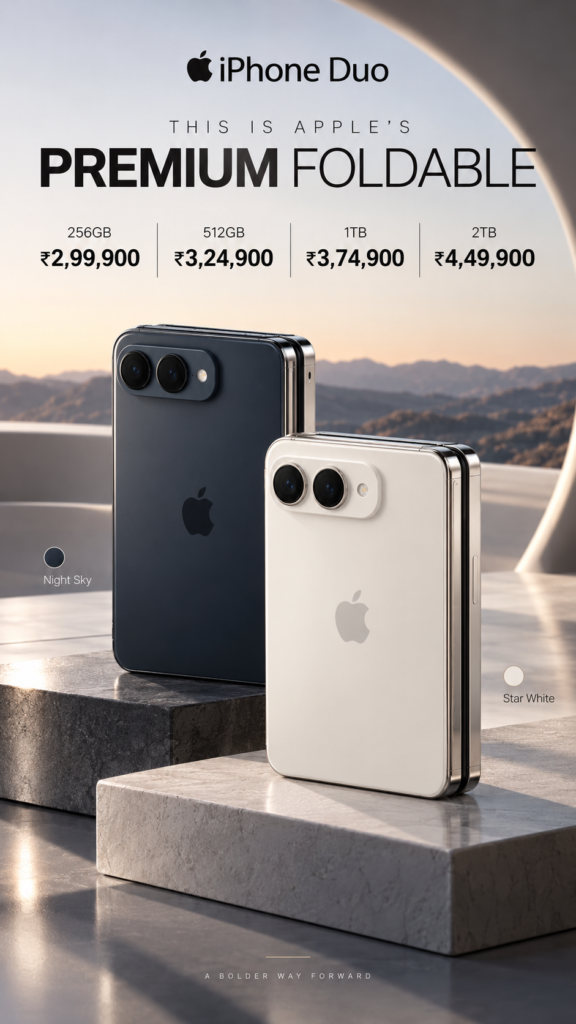
Pre-orders open globally, including in India, at 5:30 PM IST on October 16, with the phone reaching stores and first buyers on October 23 — a full month after the iPhone 18 Pro and Pro Max, which are following their usual September rollout. A further wave of 28 additional countries gets the Duo starting October 30.
Where This Leaves Apple In The Foldable Race
Samsung and Google have had this category to themselves for years, and Apple’s pricing makes clear it isn’t trying to undercut either of them — the Duo lands meaningfully above the Galaxy Z Fold lineup rather than competing on price. What Apple is betting on instead is the same thing that’s worked for the company across every new category it’s entered late: a more polished, tightly integrated software experience, built specifically for this display shape rather than adapted from an existing phone UI, at a price that assumes early adopters will pay a genuine premium to get Apple’s version of a foldable rather than waiting for it to get cheaper.
Whether that bet pays off depends on how the iPhone Duo actually feels to use over the coming weeks of reviews — but as a debut, it’s a considerably more complete, considered first foldable than most companies managed on their own first attempt at the category.
FAQs
What is the iPhone Duo and when was it announced?
The iPhone Duo is Apple’s first foldable iPhone, announced at Apple’s September 9 event alongside the iPhone 18 Pro, iPhone 18 Pro Max, and Apple Watch Series 12.
Why is the device called the iPhone Duo instead of iPhone Fold or iPhone Ultra?
Apple named it the iPhone Duo, a name that had leaked just hours before the keynote and proved accurate, instead of the previously rumored Fold or Ultra names.
What are the key design and display features of the iPhone Duo?
The iPhone Duo features two screens: a 7.6-inch inner display and a 5.4-inch outer display, both using Super Retina XDR OLED with ProMotion up to 120Hz and 3,000 nits peak brightness. When closed, the outer screen provides about 90% of the iPhone 18 Pro’s screen area, and the device is built with a 5.2mm open thickness and 11.3mm closed thickness, using Grade 5 titanium with Ceramic Shield and IP68 durability.
What powers the iPhone Duo and what are its camera and security arrangements?
The Duo runs the A20 Pro chip with 12GB of RAM and storage from 256GB to 2TB, and introduces Apple’s next-generation C2 modem with mmWave 5G support in the US. It uses a 48MP Dual Fusion rear camera (main and ultrawide) without a telephoto, while selfies are handled by a 12MP Center Stage camera on the outer display and an under-display FaceTime camera on the inner display, with Touch ID embedded in the side button.
What is notable about the software and pricing/timing for the iPhone Duo?
The Duo ships with a tailored iOS 27 version designed for folding form factors, including redesigned Dock placement and a slimmer status ring, with app layouts already optimized for the larger display. Pricing starts at $1,999 for 256GB in the US and up to $3,199 for 2TB; in India, prices begin at ₹2,99,900 and go up to ₹4,49,900. Pre-orders begin October 16, with releases on October 23 globally and a second wave from October 30 in 28 additional countries.