Every year, one date on the Hindu calendar reliably turns Mumbai’s streets into a sea of drumbeats, marigolds, and idols carried on shoulders through traffic that’s stopped for nothing else all year. In 2026, that date lands on Monday, September 14 — the day Ganesh Chaturthi begins, marking the start of a ten-day festival that closes with one of the largest mass religious processions anywhere in the world.
Why This Date, Specifically
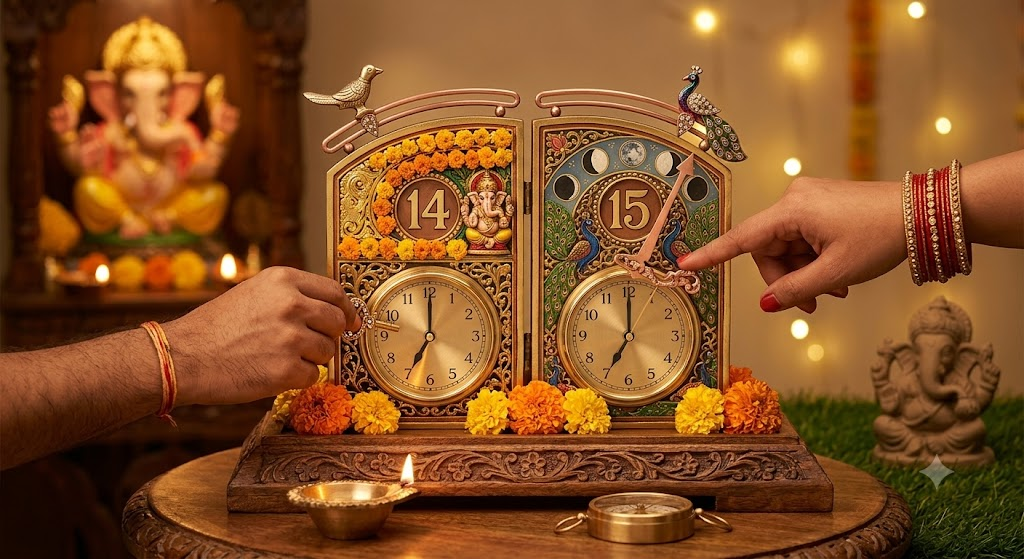
Ganesh Chaturthi doesn’t move around arbitrarily — it follows the Hindu lunisolar calendar, falling on the fourth day of the waxing moon (Shukla Chaturthi) in the month of Bhadrapada. This year, the Chaturthi tithi itself begins at 7:06 AM on September 14 and runs through to 7:44 AM the following morning, which is why the 14th is treated as the official festival date even though the lunar day technically spills slightly into the 15th.
The Muhurat That Actually Matters: Madhyahna
If you’re planning to install a Ganpati idol at home, timing isn’t just a formality in this tradition — it’s central to the ritual itself. Lord Ganesha is believed to have been born during Madhyahna, the midday period of the day, and the auspicious window for Ganpati Sthapana in 2026 falls between 11:02 AM and 1:31 PM on September 14, based on New Delhi reference timings (the exact window shifts slightly by city, so it’s worth checking local panchang timings if you’re outside North India).
Installing the idol within this specific window is considered the most spiritually significant option, though it’s far from the only acceptable time — most households and pandals work around it as closely as their schedules allow rather than treating it as a hard requirement.
Who Is Ganesha, And Why Does He Come First?
For anyone newer to the tradition, or explaining it to someone who is: Ganesha is the elephant-headed son of Shiva and Parvati, worshipped as Vighnaharta, the remover of obstacles, and as the deity of wisdom, learning, and new beginnings. That last part explains a cultural habit you’ll notice across India regardless of region or language — Ganesha is invoked first, before any other prayer, wedding, business launch, or new venture. Ganesh Chaturthi is essentially a ten-day extension of that same instinct: welcoming him in as an honored guest before letting anything else in life properly begin.
From Sthapana To Visarjan: How The Ten Days Unfold
The festival’s arc has two clear bookends. It opens with Sthapana — the installation of the idol — on September 14, and closes with Visarjan, the immersion of the idol in a river, lake, or the sea, which is meant to represent Ganesha returning to his celestial home after his stay on earth.
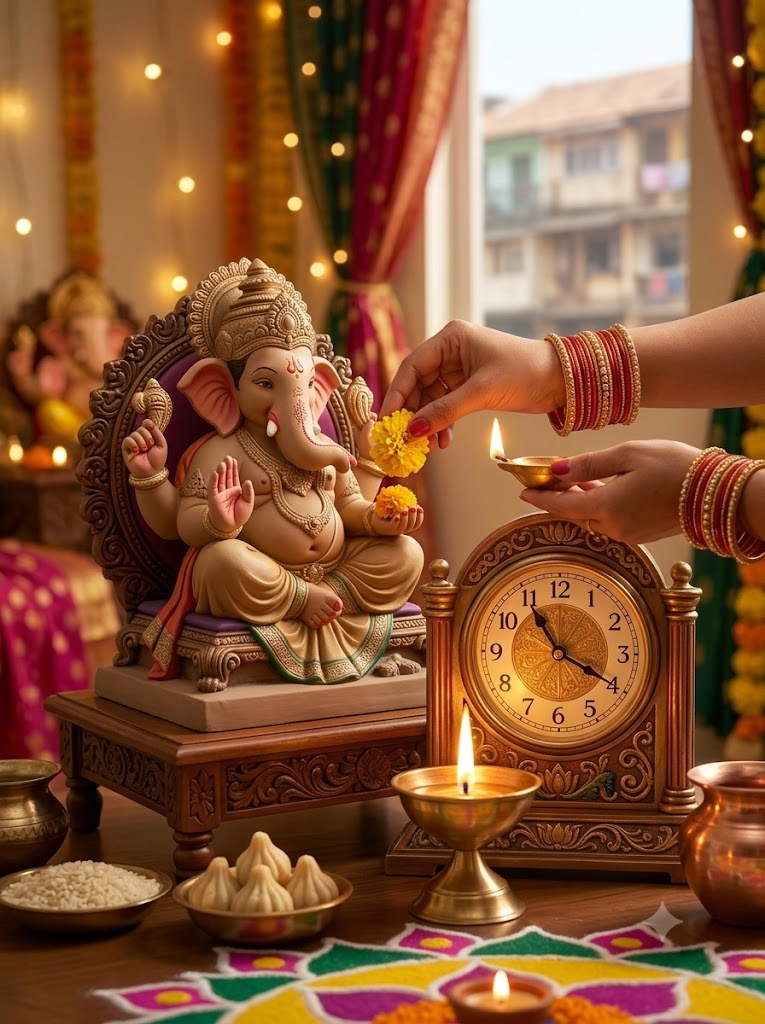
What’s less commonly known outside India is that not every household keeps the idol for the full ten days. Visarjan timing is actually a personal or family tradition that varies widely:
- 1.5-day Visarjan — September 15, common among working families and smaller apartment celebrations
- 3-day Visarjan — September 16, one of the more widely followed options for home pujas
- 5-day Visarjan — September 18, especially popular across Maharashtra and Gujarat
- 7-day Visarjan — September 20, for families and communities extending the celebration further
- 10-day Visarjan (Anant Chaturdashi) — September 25, the grand finale, when the largest public processions and pandal immersions take place
That final date, Anant Chaturdashi, is the one most people picture when they think of Ganesh Chaturthi’s iconic imagery — massive crowds accompanying decorated idols to the coastline, drumming and dancing the entire route, for what is genuinely one of the largest annual gatherings anywhere in the world when Mumbai’s processions are counted together.
Not Just A Maharashtra Festival
Ganesh Chaturthi’s public holiday status extends well beyond Maharashtra, where it’s most closely associated culturally — it’s also an official holiday in Goa, Gujarat, Karnataka, and Odisha. In South India, the festival is often referred to as Vinayaka Chaturthi, and while the underlying devotion is identical, the visible celebration style shifts noticeably. Rather than the pandal-driven public spectacle that defines the festival in Mumbai and Pune, South Indian households tend to favor quieter, family-centered pujas — the same welcome, expressed through a different rhythm.
What’s Changing In How India Celebrates
One shift worth noting for anyone tracking the festival year over year: eco-friendly idols have become a genuinely mainstream part of the conversation rather than a niche alternative. Concerns about plaster-of-Paris idols and immersion pollution have pushed clay, natural-fiber, and biodegradable options into far wider use across recent years, with several municipal bodies and community pandals actively promoting the switch ahead of each Visarjan cycle. It’s one of the more visible examples of a centuries-old tradition adapting its practical execution without changing its core meaning.
The Bottom Line
Ganesh Chaturthi 2026 begins Monday, September 14, with the most auspicious Ganpati Sthapana window falling between 11:02 AM and 1:31 PM, and closes with the grand Visarjan on Anant Chaturdashi, September 25. Between those two dates sits ten days of modaks, drumbeats, and a shared cultural instinct that spans states and languages: invite in the remover of obstacles first, celebrate fully while he’s here, and then let him go, trusting — as the tradition goes — that he’ll return again next year.
FAQs
What is Ganesh Chaturthi and when does it take place in 2026?
Ganesh Chaturthi is a ten-day festival welcoming Ganesha, the remover of obstacles, with the date determined by the Hindu lunisolar calendar. In 2026, it begins on Monday, September 14, with the idol installation (Sthapana) and culminates in the Visarjan on Anant Chaturdashi, September 25.
Why is the date September 14 considered official for Ganesh Chaturthi in 2026?
The festival follows the fourth day of the waxing moon (Shukla Chaturthi) in the month of Bhadrapada. This year, the Chaturthi tithi begins at 7:06 AM on September 14 and runs through 7:44 AM the next morning, so September 14 is treated as the official festival date even though the lunar day spills slightly into the 15th.
What is the significance of Madhyahna for Ganpati Sthapana this year?
Madhyahna, the midday period, is considered the most auspicious window for Ganpati Sthapana because Lord Ganesha is believed to have been born during Madhyahna. For 2026, the auspicious window falls between 11:02 AM and 1:31 PM on September 14, though it may vary slightly by city.
What do Sthapana and Visarjan represent in the ten-day festival?
Sthapana marks the installation of the Ganpati idol on September 14, starting the ten-day celebration, while Visarjan is the immersion of the idol in a river, lake, or sea, representing Ganesha’s return to his celestial home. Families may observe Visarjan on different days, from 1.5 to 10 days after installation.
How is Ganesh Chaturthi celebrated beyond Maharashtra and what about eco-friendly practices?
Ganesh Chaturthi is also an official holiday in Goa, Gujarat, Karnataka, and Odisha, with regional variations in celebration. In South India, it is often called Vinayaka Chaturthi and tends to be more family-centered. Recently, eco-friendly idols made of clay and natural materials have become mainstream as communities promote sustainable immersion.


